Your roof works hard every day.
It protects your home, warehouse, office or workshop from intense sunlight, heavy rainfall, hailstorms and strong winds.
Yet it is often one of the most neglected parts of a building.
Many property owners only think about their roof after they notice a leak.
Unfortunately, by then, damage may already have spread to ceilings, insulation, walls or electrical systems.
The good news is that regular roof inspections are simple, affordable and one of the best ways to extend the lifespan of your roofing system.
This checklist will help you identify common issues before they become expensive problems.
Why Regular Roof Maintenance Matters
Routine maintenance offers several important benefits.
It helps you:
- Detect small problems early.
- Prevent roof leaks.
- Extend the lifespan of your roof.
- Reduce repair costs.
- Improve drainage.
- Protect the value of your property.
A roof inspection twice a year can often prevent repairs that cost many thousands of rand.
1. Inspect the Roof Sheets
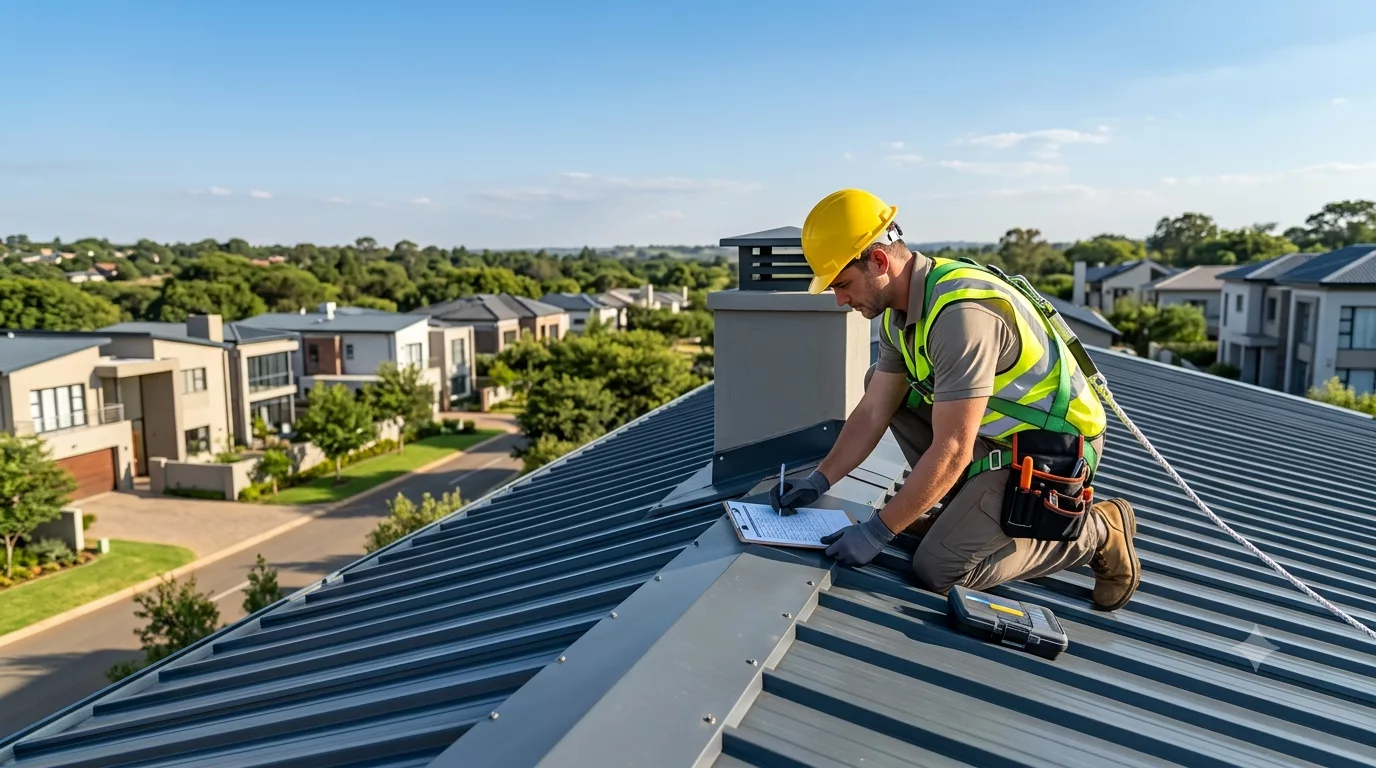
Walk around your property and visually inspect the roof.
Look for:
- Dents.
- Cracks.
- Loose sheets.
- Rust.
- Lifted edges.
- Visible damage after storms.
Any damaged sheet should be assessed before the next rainy season.
2. Check Roofing Screws
Roofing screws should remain secure and watertight.
Inspect for:
- Loose fasteners.
- Missing screws.
- Rust.
- Cracked sealing washers.
Faulty fasteners are one of the most common causes of roof leaks.
3. Examine the Flashings
Flashings protect some of the most vulnerable areas of the roof.
Inspect:
- Ridge flashings.
- Valley flashings.
- Wall flashings.
- Chimney flashings.
Look for rust, gaps, loose fixings or signs of movement.
4. Clean the Gutters
Blocked gutters stop rainwater from draining properly.
Remove:
- Leaves.
- Dirt.
- Bird nests.
- Branches.
- Moss.
Clean gutters reduce the likelihood of overflowing water entering the roof structure.
5. Check the Downpipes
Water should flow freely through every downpipe.
Look for:
- Blockages.
- Loose brackets.
- Cracks.
- Rust.
Proper drainage protects both your roof and your building’s foundation.
6. Look for Rust
Small patches of rust are much easier to repair than widespread corrosion.
Pay close attention to:
- Fasteners.
- Roof edges.
- Flashings.
- Roof valleys.
Treating rust early can significantly extend the life of your roof.
7. Inspect Roof Valleys
Roof valleys carry large volumes of rainwater.
They should remain free from debris and signs of damage.
Blocked valleys often contribute to leaks during heavy storms.
8. Check Roof Edges
Wind can gradually loosen roof edges over time.
Inspect for:
- Lifted sheets.
- Loose barge flashings.
- Damaged trims.
- Missing fasteners.
Strong winds place additional stress on these areas.
9. Look Inside the Roof Space
Not every roofing problem is visible from outside.
Inside the roof space, check for:
- Water stains.
- Damp insulation.
- Mould.
- Sunlight shining through gaps.
- Timber damage.
These signs often reveal problems before they become visible inside the building.
10. Inspect After Every Major Storm
Hail and strong winds can damage roofing materials.
After severe weather, inspect for:
- Dents.
- Lifted roof sheets.
- Broken flashings.
- Blocked gutters.
Prompt repairs help prevent additional damage.
11. Trim Overhanging Trees
Branches rubbing against the roof can scratch protective coatings.
Falling branches may also dent roof sheets during storms.
Keeping trees trimmed reduces these risks.
12. Check Sealants
Roof sealants around flashings and penetrations should remain flexible and intact.
Replace cracked or deteriorated sealants before they begin allowing water into the roof structure.
13. Watch for Interior Warning Signs
Sometimes the first indication of a roofing problem appears inside the building.
Watch for:
- Water stains.
- Bubbling paint.
- Damp ceilings.
- Mould growth.
- Musty odours.
These signs should never be ignored.
14. Schedule Professional Inspections
Even if your roof appears to be in good condition, professional inspections can identify problems that are difficult to spot from ground level.
A trained eye can often detect early warning signs long before they develop into costly repairs.
15. Keep a Maintenance Record
Recording inspection dates, repairs and observations makes it easier to monitor the condition of your roof over time.
It also helps identify recurring issues before they become major expenses.
When Is It Better to Replace Instead of Repair?
Repairs are often the right solution when the damage is localised.
Replacement may be worth considering if:
- The roof has extensive corrosion.
- Leaks occur in several locations.
- Repairs are becoming increasingly frequent.
- Large sections of roof sheeting have deteriorated.
If you are unsure, seek advice from an experienced roofing supplier before making a decision.
Useful Resources for Property Owners
If you want to learn more about protecting your roof, these guides may also help:
- How to Choose Roof Sheeting
- Roof Flashings Explained
- Roofing Screws Explained
- Roof Leak Repair Case Study
- Warehouse Roof Replacement
- Chromadek vs Galvanised Roofing
Together, these resources cover many of the most common questions property owners ask before repairing or replacing a roof.
Frequently Asked Questions
How often should I inspect my roof?
Most roofs should be visually inspected at least twice a year, with additional inspections after severe storms.
Can regular maintenance prevent roof leaks?
Routine maintenance cannot prevent every problem, but it significantly reduces the likelihood of unexpected leaks and costly repairs.
What is the first thing I should check if I notice a leak?
Start by inspecting roofing screws, flashings, gutters and visible damage before assuming the roof sheets need replacing.
Is roof maintenance expensive?
Basic inspections and preventative maintenance are usually far more affordable than repairing extensive water damage.
Final Thoughts
Your roof is one of the hardest-working parts of your property, yet it often receives the least attention.
Regular inspections, preventative maintenance and prompt repairs can extend the life of your roof, improve its performance and save you money over the long term.
Whether you own a home, warehouse, workshop or commercial building, taking a proactive approach to roof maintenance is always worthwhile.
If your inspection reveals damaged roof sheeting, worn flashings or roofing accessories that need replacing, Roofsheeting Warehouse manufactures quality steel roof sheeting, custom flashings and roofing accessories in Pretoria, with delivery throughout Gauteng. Their experienced team can help you find the right products to keep your roof performing at its best for years to come.