A roof doesn’t always have to block out the daylight.
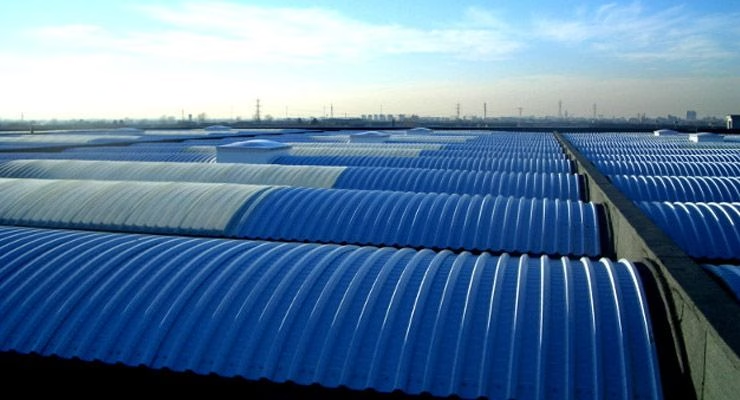
For workshops, warehouses, factories, patios, agricultural buildings and other covered spaces, strategically placed polycarbonate roof sheeting can introduce natural light while remaining part of the overall roofing system.
The key is using it correctly.
Polycarbonate isn’t simply a transparent alternative to steel. It has different performance characteristics, installation requirements and applications.
Here’s what you need to know before specifying it.
What Is Polycarbonate Roof Sheeting?
Polycarbonate is a lightweight, impact-resistant thermoplastic used for a variety of roofing and cladding applications.
Profiled polycarbonate sheets can be manufactured to match common metal roofing profiles, allowing translucent panels to be incorporated into a roof alongside steel sheets.
This makes polycarbonate particularly useful for rooflights and daylighting applications.
South African suppliers offer polycarbonate roofing in profiles designed to match common IBR, Corrugated and Widespan roofing systems.
Why Put Polycarbonate Sheets in a Roof?
The biggest reason is simple:
Natural light.
A building that relies entirely on artificial lighting during daylight hours may have an opportunity to reduce its dependence on electric lighting by introducing daylight through selected roof panels.
Potential applications include:
- Workshops
- Warehouses
- Factories
- Garages
- Agricultural buildings
- Covered walkways
- Patios
- Carports
- Commercial buildings
The objective isn’t necessarily to make the entire roof translucent.
Instead, polycarbonate can be strategically incorporated into selected areas.
How Does Rooflight Sheeting Work?
Imagine a large warehouse roof made primarily from steel.
Rather than replacing the entire roof with translucent material, selected roof panels can be replaced or integrated with compatible polycarbonate panels.
The result is a roof that continues to provide the structural and weather-protection functions of the main roofing system while allowing daylight through designated sections.
This is why profile compatibility matters.
A polycarbonate panel needs to work with the roofing system rather than simply being placed on top of it.
Can Polycarbonate Match IBR and Corrugated Roofing?
Yes, profiled polycarbonate roofing is available in profiles designed to correspond with common metal roofing systems.
For example, South African suppliers list polycarbonate products with IBR and Corrugated cover widths that correspond with commonly used steel roofing profiles.
That makes it possible to design a mixed roof using steel and translucent panels.
The exact product and installation method should always be confirmed with the manufacturer’s technical information.
What About UV Exposure?
UV protection is an important consideration when selecting polycarbonate roofing.
Polycarbonate is exposed to sunlight throughout its service life, so the product’s UV protection and manufacturer warranty matter.
Palram, for example, explains that its UV-protected polycarbonate products are designed to protect against photodegradation, yellowing and brittleness.
This is one reason buyers should not treat all translucent plastic roofing products as interchangeable.
Ask:
- What type of polycarbonate is it?
- What UV protection does it have?
- Is the protection on one or both sides?
- What warranty applies?
- What installation method does the manufacturer specify?
Polycarbonate Is Not Just About Transparency
Different polycarbonate products can offer different levels of light transmission, diffusion, impact resistance and thermal performance.
For example, Youngman’s South African range describes polycarbonate roofing products designed around light transmission, UV protection and impact resistance, with different products intended for different applications.
So the right question isn’t simply:
“Do you have clear roof sheets?”
A better question is:
“What type of daylighting performance does my building require?”
Where Can Polycarbonate Be Particularly Useful?
Workshops
Natural daylight can make workshops more pleasant and potentially reduce the need for artificial lighting during the day.
Warehouses
Large warehouses can have substantial roof areas and limited wall openings.
Strategically positioned rooflights can help bring daylight deeper into the building.
Factories
Manufacturing environments often require good visibility while maintaining weather protection.
Agricultural Buildings
Barns, storage buildings and other agricultural structures can benefit from additional daylight without installing large windows.
Patios and Covered Areas
Polycarbonate can also be used in smaller structures where natural light is part of the desired design.
Don’t Ignore Thermal Considerations
More natural light does not automatically mean a building will remain cooler.
The amount and type of solar radiation transmitted through the roof needs to be considered.
For buildings where temperature control is important, product selection should consider:
- Light transmission
- Solar heat gain
- UV protection
- Ventilation
- Insulation
- Roof orientation
- The percentage of translucent roofing used
For larger buildings, these considerations should form part of the overall building design rather than being treated as an afterthought.
Installation Matters
Polycarbonate has different thermal expansion characteristics from steel.
Palram specifically recommends pre-drilling appropriately sized holes in certain polycarbonate roofing applications to allow for expansion and contraction caused by temperature changes.
This illustrates an important principle:
Do not install polycarbonate exactly as though it were steel roofing.
Follow the product manufacturer’s installation instructions.
How Much Polycarbonate Should You Use?
There is no universal percentage that works for every building.
The amount required depends on:
- Building use
- Roof size
- Desired daylight levels
- Roof orientation
- Existing windows
- Artificial lighting
- Climate
- Product specifications
A roofing supplier can help you determine what products are available, but daylighting design for a large commercial building may also require input from the project’s design team.
Combining Steel and Polycarbonate
One of the biggest advantages of profiled polycarbonate is that it can be integrated with conventional steel roofing.
Roofsheeting Warehouse’s product range includes polycarbonate alongside IBR, Corrugated and Widespan roofing.
That means a project can potentially combine:
Steel roofing + polycarbonate daylighting + flashings + rainwater goods
rather than sourcing each component from multiple suppliers.
Frequently Asked Questions
Is polycarbonate good for roofing?
Polycarbonate is widely used for roofing and daylighting applications because it can provide light transmission and impact resistance. The correct product must be selected for the application.
Does polycarbonate roofing block UV?
UV performance depends on the specific product. Many roofing-grade polycarbonate products incorporate UV protection, so always check the manufacturer’s specification.
Can polycarbonate roofing be used with IBR?
Yes. Profiled polycarbonate products are available to match common IBR profiles.
Does polycarbonate roofing get hot?
It can contribute to solar heat gain depending on the product, colour, light transmission and building design. Thermal performance should therefore be considered alongside daylighting requirements.
The Bottom Line
Polycarbonate roof sheeting can be a practical way to introduce natural daylight into a building without turning the entire roof into a translucent structure.
The key is to treat it as part of a complete roofing system.
Choose the correct profile, check UV and thermal characteristics, use compatible products and follow the manufacturer’s installation requirements.
For commercial and industrial buildings in particular, good daylighting starts with planning rather than simply adding a few transparent sheets after the roof has been designed.
Planning a roofing project that needs natural light? Roofsheeting Warehouse supplies polycarbonate alongside IBR, Corrugated and Widespan roofing products and can help you plan the material requirements for your project.