Few things are more frustrating than discovering water dripping from your ceiling after a heavy storm.
A leaking roof is more than an inconvenience. Left untreated, it can damage ceilings, insulation, electrical systems, furniture and even the structural integrity of your building.
The good news is that most roof leaks do not happen without warning. In many cases, the signs appear long before water starts entering the property.
Understanding what causes roof leaks can help you take action early, reduce repair costs and extend the life of your roof.
In this guide, we explain the most common causes of roof leaks in South Africa and what you can do to prevent them.
1. Damaged Roof Sheets
One of the most obvious causes of a leaking roof is physical damage to the roof sheeting.
Damage may result from:
- Hailstorms
- Falling branches
- Strong winds
- Incorrect installation
- Foot traffic during maintenance
Even a small dent or puncture can allow water to enter over time.
If you notice damaged sheets, replace them before the next rainy season.
2. Loose Roofing Screws
Roofing screws naturally expand and contract as temperatures change.
Over time, they may loosen slightly.
A loose fastener creates a small opening where water can enter.
During routine inspections, check for:
- Missing screws
- Loose fasteners
- Damaged sealing washers
- Rust around fixing points
Replacing worn fasteners is often a simple and inexpensive repair.
3. Worn or Damaged Flashings
Flashings protect the areas where two roof sections meet or where the roof joins a wall, chimney or skylight.
If a flashing becomes loose, bent or damaged, rainwater can quickly find its way inside.
Many roof leaks originate around flashings rather than the roof sheets themselves.
Inspect these areas regularly, especially after severe weather.
4. Blocked Gutters and Downpipes
Leaves, dirt and debris can prevent rainwater from flowing away properly.
Instead, water begins to pool on the roof.
Standing water increases the likelihood of leaks and may also contribute to premature corrosion.
Cleaning gutters regularly is one of the easiest ways to protect your roof.
5. Incorrect Roof Pitch
Every roofing profile has a recommended minimum roof pitch.
If the pitch is too low, rainwater may not drain effectively.
Instead, water can collect on the roof and eventually work its way through overlaps or fixing points.
Choosing the correct roofing profile during the planning stage helps prevent this problem.
For a comparison of common roofing profiles, read our guide on IBR, Corrugated or Widespan.
6. Poor Installation
Even premium roofing materials cannot compensate for poor workmanship.
Common installation mistakes include:
- Incorrect overlaps
- Poor screw placement
- Missing flashings
- Uneven roof sheets
- Incorrect fastener spacing
Professional installation is just as important as choosing quality roofing products.
7. Rust and Corrosion
Rust weakens steel over time.
Once corrosion penetrates the protective coating, small holes may eventually develop.
Routine inspections help identify rust before it becomes a major problem.
Cleaning the roof and addressing damaged coatings promptly can significantly extend its lifespan.
8. Ageing Roofing Materials
No roofing material lasts forever.
Years of exposure to sunlight, heavy rain and changing temperatures gradually affect every roof.
If your roof is showing multiple signs of wear, replacement may be more cost-effective than repeated repairs.
Our Warehouse Roof Replacement case study demonstrates how replacing ageing roofing materials improved both safety and long-term value.
9. Storm Damage
South African storms can bring heavy rainfall, hail and strong winds.
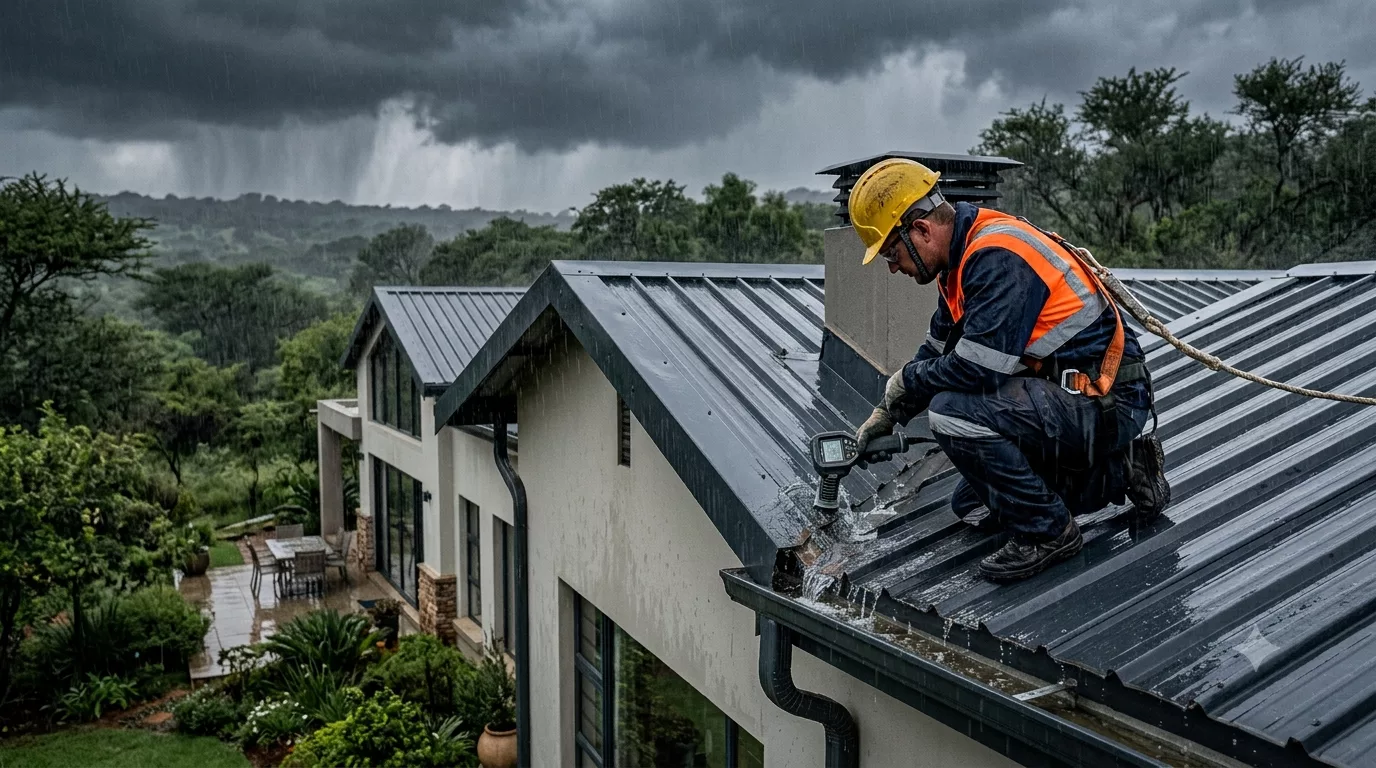
After severe weather, inspect your roof for:
- Loose sheets
- Lifted flashings
- Missing screws
- Visible dents
- Blocked gutters
Early detection often prevents more extensive repairs later.
10. Poor Roof Maintenance
Many property owners only inspect their roof after a leak develops.
Instead, perform a visual inspection at least twice a year.
Look for:
- Rust
- Debris
- Loose fixings
- Damaged flashings
- Blocked gutters
Preventative maintenance is always less expensive than emergency repairs.
11. Low-Quality Roofing Materials
Choosing the cheapest materials available may reduce your initial costs, but inferior products often wear out sooner.
Quality roof sheeting manufactured to recognised standards provides better long-term performance and reliability.
Investing in quality materials usually saves money over the lifespan of the roof.
12. Delaying Small Repairs
One of the biggest mistakes property owners make is ignoring a small leak.
A tiny water stain today can become a major structural repair tomorrow.
Addressing minor issues promptly protects both your property and your budget.
How to Prevent Roof Leaks
Preventing roof leaks is usually much easier than repairing water damage.
Here are a few simple maintenance habits that make a big difference:
- Inspect your roof every six months.
- Clean gutters before the rainy season.
- Replace damaged screws and washers.
- Repair rust as soon as it appears.
- Check flashings after severe storms.
- Replace damaged roof sheets promptly.
- Work with experienced roofing professionals.
When Should You Repair Instead of Replace?
Not every leaking roof needs to be replaced.
Repairs are often sufficient when:
- The damage is isolated.
- The roof is still structurally sound.
- Most roof sheets remain in good condition.
Replacement may be the better option if:
- Leaks occur in multiple areas.
- Corrosion is widespread.
- The roof has reached the end of its service life.
- Repair costs continue to increase.
If you are unsure, an inspection by an experienced roofing specialist can help you make the right decision.
Why Quality Roofing Matters
Many roof leaks are preventable.
They often result from poor planning, inadequate maintenance or low-quality materials rather than unavoidable wear.
Choosing the correct roofing profile, using quality materials and carrying out regular inspections can dramatically reduce the risk of future leaks.
If you are planning a new roofing project, our guide on How to Choose Roof Sheeting explains the differences between the most popular roofing options and how to select the best solution for your property.
Frequently Asked Questions
Can a small roof leak become a serious problem?
Yes. Even a small leak can damage insulation, ceilings, timber structures and electrical systems if left untreated.
How often should I inspect my roof?
A visual inspection twice a year is recommended, with additional inspections after severe storms.
Should I repair or replace my roof?
It depends on the extent of the damage, the age of the roof and the overall condition of the roofing materials. A professional assessment can help determine the most cost-effective solution.
What is the most common cause of roof leaks?
Loose fasteners, damaged flashings, blocked gutters and ageing roofing materials are among the most common causes.
Final Thoughts
Roof leaks rarely happen without warning.
Most develop gradually as small problems are left untreated. By carrying out routine inspections, addressing minor issues early and investing in quality roofing materials, you can protect your property and avoid costly repairs.
If you need replacement roof sheeting, flashings or expert advice, Roofsheeting Warehouse manufactures quality steel roofing products in Pretoria and delivers throughout Gauteng. Whether your project involves repairing a residential roof or replacing roofing on a large commercial building, our experienced team can help you choose the right solution with confidence.